Northern Botswana is having one of those years that safari lovers dream about. Guests flying into the Delta right now are already seeing scenes that look almost unreal — and the main floodwaters haven’t even fully arrived yet.
For travellers heading to Botswana this season, this isn’t bad news. Quite the opposite. This is the Okavango doing exactly what makes it one of Africa’s greatest natural wonders.
Every year, the Okavango Delta transforms as floodwaters slowly travel down from the Angolan Highlands into Botswana. It is one of nature’s great miracles: rain falling thousands of kilometres away eventually arrives in the Delta during Botswana’s dry winter months.
But no two flood years are ever the same.
This year, several major factors have combined to create exceptionally high water levels:
The result? Water is spreading further, faster and wider than usual.
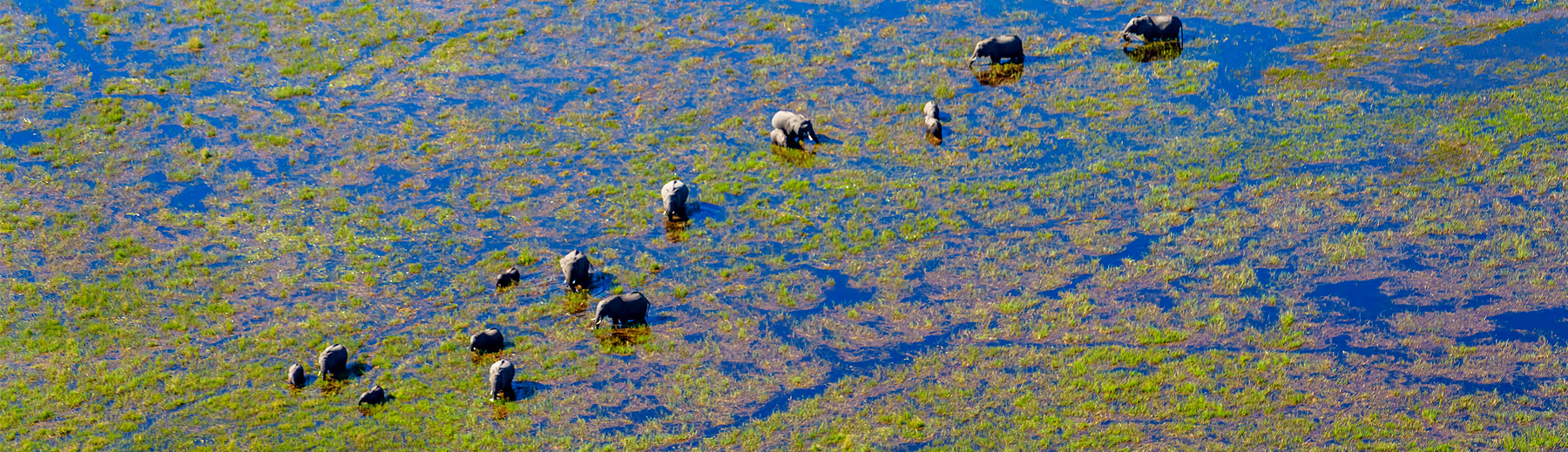
From the air, the landscape is extraordinary. Flying between Kasane and Maun recently, the Chobe River stretched endlessly across the horizon, Khwai and Xugana glistened with full lagoons and winding channels, while islands and elevated areas rose dramatically out of the floodplains.
And the season is only getting started.
The Okavango Delta exists because of this flood cycle. Without it, there would be no maze of waterways, papyrus-lined channels, lily-covered lagoons and rich floodplains that make the region so iconic.
This year’s inundation is what many safari experts are calling a “classic” Okavango year — the kind where the balance between land and water shifts constantly and dramatically throughout the season.
Floodplains are filling.
Channels are reconnecting.
Boating routes are reopening.
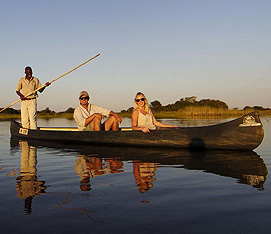
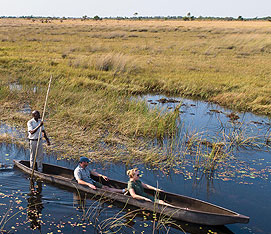
Mokoro excursions are reaching areas that have been inaccessible for years.
The Delta feels alive in every direction.
And for visitors, that creates a safari experience that is completely different from a typical dry-year safari.
A high-water year reshapes the safari experience in fascinating ways.
In some areas, game drives become more limited as water cuts off certain roads or pushes wildlife onto higher ground. But at the same time, water-based activities become exceptional.
Suddenly, boats can travel deeper into the Delta.
Mokoros glide silently through newly flooded channels.
Birdlife explodes across the wetlands.
Hippos thrive in expanded waterways.
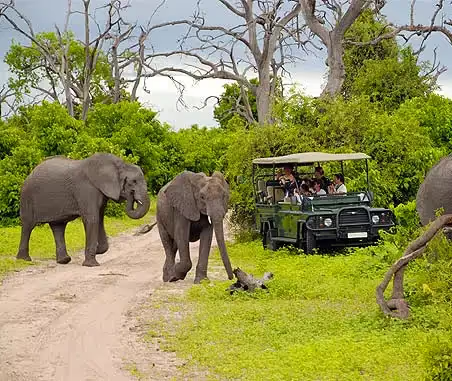
Elephants swim between islands.
This is when the Okavango becomes the Okavango people imagine in documentaries and coffee table books.
Guests visiting this year will have the chance to witness wildlife adapting in real time to changing conditions. Some animals move toward drier areas, while others flourish in the flooded landscapes. The shifting ecosystem creates constantly changing safari dynamics that simply do not exist in drier years.
It is unpredictable.
It is wild.
And that is exactly why it is so special.
One of the biggest misconceptions about high water is that it somehow “ruins” safaris.
Good operators know better.
Northern Botswana’s camps and guides are incredibly experienced at adapting to changing conditions and many camps were designed specifically for years like this.
Some camps are now delivering supplies by boat instead of vehicle. In more remote areas, helicopters are occasionally being used for guest transfers where airstrips or roads are affected.
But for travellers, this often becomes part of the adventure rather than a problem.
At many camps (e.g. Atzaro, Vumbura Plains and Jao Camp) raised walkways and water-focused activities were built for exactly these conditions. At other camps, guests can now enjoy boating and mokoro trips directly from camp while still accessing nearby islands for game drives.
In Chobe, operators are adjusting routes and launching boats from alternative access points while continuing to offer incredible wildlife experiences deeper inside the park.
The reality is simple: Botswana’s safari industry is exceptionally good at adapting.
Things may take slightly longer.
Plans may shift.
Roads may change.
But honestly, that is part of the magic.
A safari where every single moment unfolds exactly according to schedule feels more like a tour. The best safari experiences always carry an element of unpredictability.
If you are wondering whether the flood affects wildlife viewing, the answer is both yes and no.
In the Delta itself, wildlife movements become more dynamic. Some animals move toward higher, drier islands while others remain closely tied to the water.
This often creates very concentrated wildlife sightings in certain areas.
At the same time, Botswana has the enormous advantage of offering completely different ecosystems within relatively easy reach of one another.
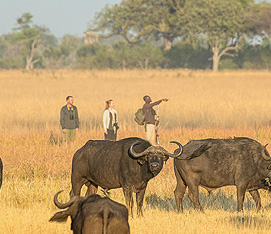
While the Delta floods, areas like Savuti, the Linyanti, Nogatsaa and the Central Kalahari continue delivering outstanding land-based game viewing.
Places like:
remain largely unaffected by the inundation while offering excellent predator sightings and classic dry-country safari experiences.
This is why itinerary design matters more than ever during a high-water year.
The best Botswana safaris combine multiple ecosystems — pairing water-focused Delta camps with drier land-based regions for contrast and variety.
Perhaps the most important thing to understand is this:
This flood is not a disaster.
It is something to celebrate.
Years like this do not happen in exactly the same way twice. The Okavango is one of the world’s last truly dynamic wilderness systems and this season is a reminder that nature still operates entirely on its own terms here.
For photographers, birders, repeat Botswana travellers and anyone who loves wild landscapes, this could become one of the most memorable Okavango seasons in years.
The floodwaters are still moving south.
The channels are still filling.
The Delta is still changing week by week.
And guests arriving over the coming months are going to witness a version of Botswana that very few people ever get to see.
If you are travelling to Botswana this year, embrace the water.
Expect flexibility.
Expect changing conditions.
Expect a safari that feels wonderfully unscripted.
Because this is the Okavango at its most alive.
The flood has not even fully arrived yet and already northern Botswana looks unlike anywhere else on earth. From overflowing rivers and gleaming lagoons to mokoros gliding through newly flooded channels, this season promises something genuinely rare.
And honestly?
That is exactly what safari should be.
"A dream come true"
We had the most amazing family holiday, everything worked so perfectly, the arrangements and accommodation was spectacular!
"Unforgettable trip to Namibia – Thank you Namibia Tours & Safaris!"
We are a group of four from Romania and spent 3 unforgettable weeks in Namibia. We can't recommend them enough, and for any future travels in Namibia or other parts of Africa, we will definitely use their services again.
"We had a great experience"
From the time we put the key in the ignition till we boarded the plane in Windhoek nothing went wrong.
"Unforgettable bird photography trip in Namibia"
It was a fantastic experience, everything was very well organised, went smooth and according to expectations. It was our first self drive in Africa and it was a great, unforgettable time.